Что же вы ищете?


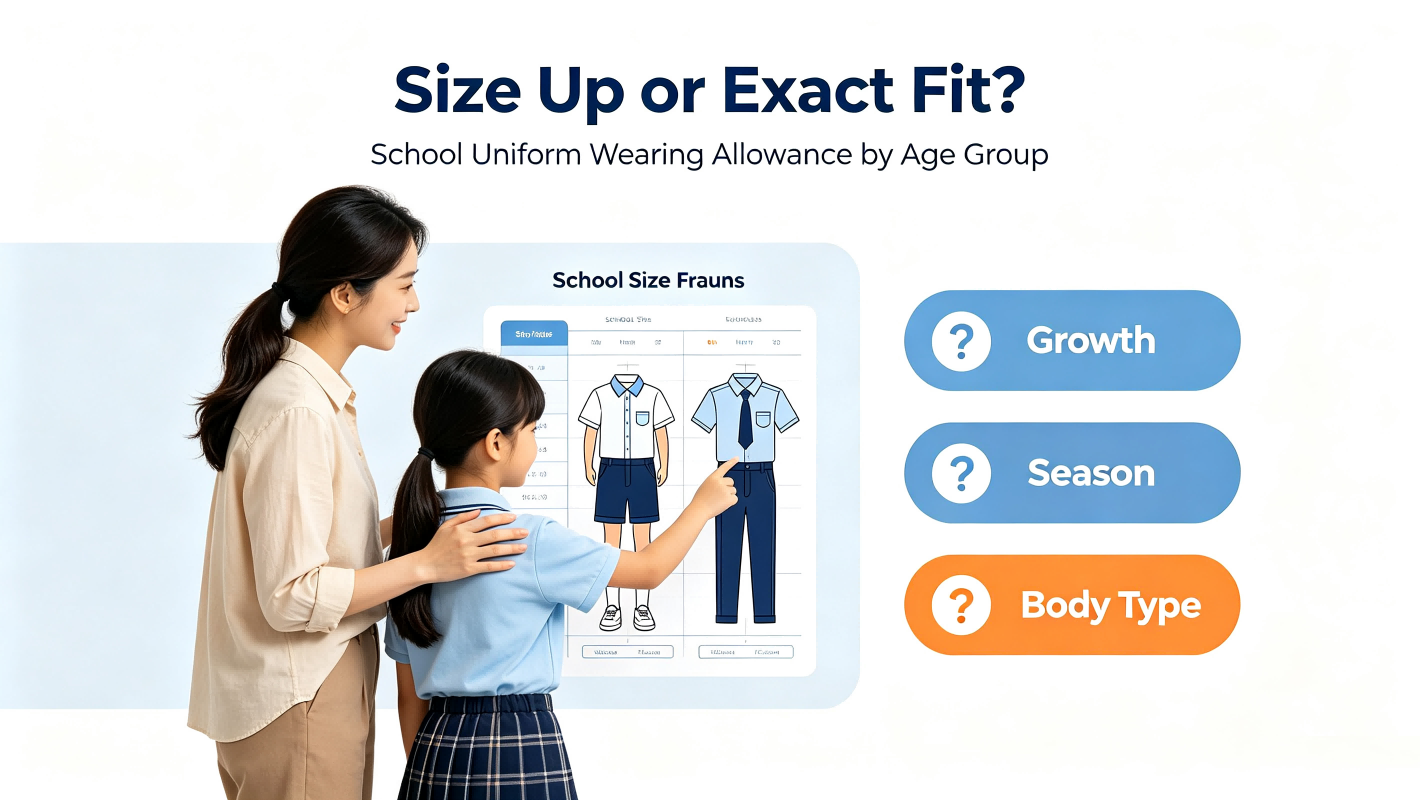
Every time the school sends out the uniform order notice, the hottest topic in parent group chats is always the same – "What size are you getting for your kid?"
Some say, "Size up so it lasts another year." Others say, "A proper fit looks sharper—too big and they look like they're wearing someone else's clothes." Both sides have a point, and both have had their share of regrets. Today we're going to break this down properly—covering growth patterns, seasonal needs, fabric properties, and more. After reading this, you'll know exactly what to do.
1. Why is "size up" such a popular idea?
Before picking sides, let's be fair—sizing up does have its logic.
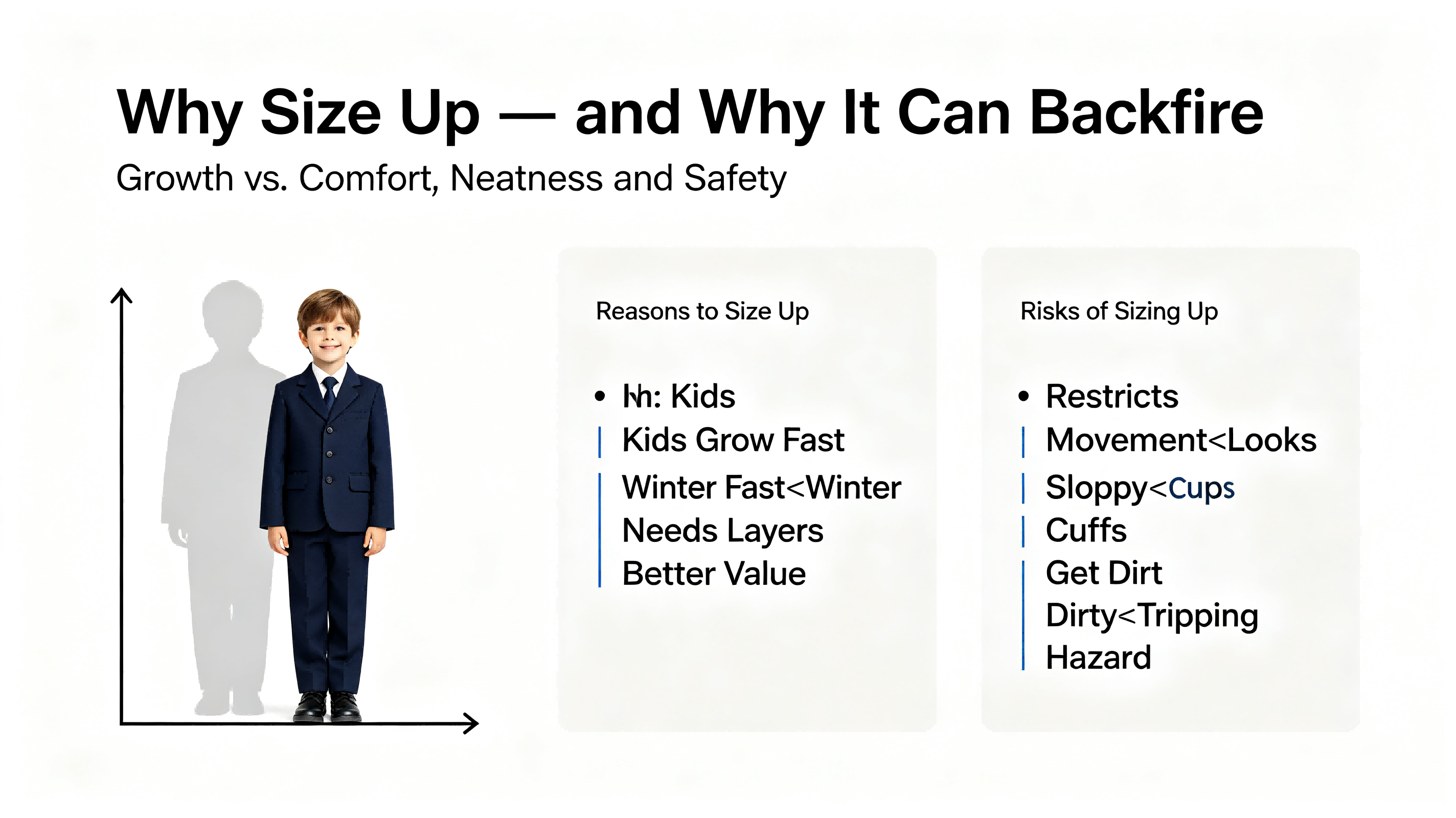
The biggest reason: kids grow like weeds. A first- or second-grader can shoot up 5–8 cm in six months. A uniform that fits perfectly at the start of the term might be noticeably short by midterms. The first year of middle school is another growth spurt period—boys can grow 7–9 cm per year, with peak years reaching 10–12 cm; girls grow 6–8 cm annually. In that situation, a uniform barely lasts a year, and parents feel like they're throwing money away.
Winter uniforms really do need to be a bit bigger. You've got thermal underwear and sweaters underneath—if there's no extra room, your kid looks like a stuffed sausage and can barely lift their arms.
Then there's the "value for money" mindset. A full uniform costs at least 100–200 yuan—parents want it to last as long as possible. Sizing up feels like buying an extra year of wear, saving you the cost of another set.
These are all understandable. But here's the catch—sizing up works in some cases, but in others it just creates more problems.
2. The risks of sizing up are more than you think
Here's a hard truth: kids don't grow at a steady pace. The oversized uniform you buy this year might be too short next year if your kid hits a sudden growth spurt—even more awkward than if you'd bought the right size.
And some real-life horror stories:
First, it's uncomfortable and gets in the way. Sleeves bunch up at the wrists, trousers drag on the ankles, and kids trip over their own hems during PE. Some kids come home complaining, "I can't raise my arms"—because the jacket is so big that when they lift their arms, the shoulder seams sit in the wrong place and restrict movement.
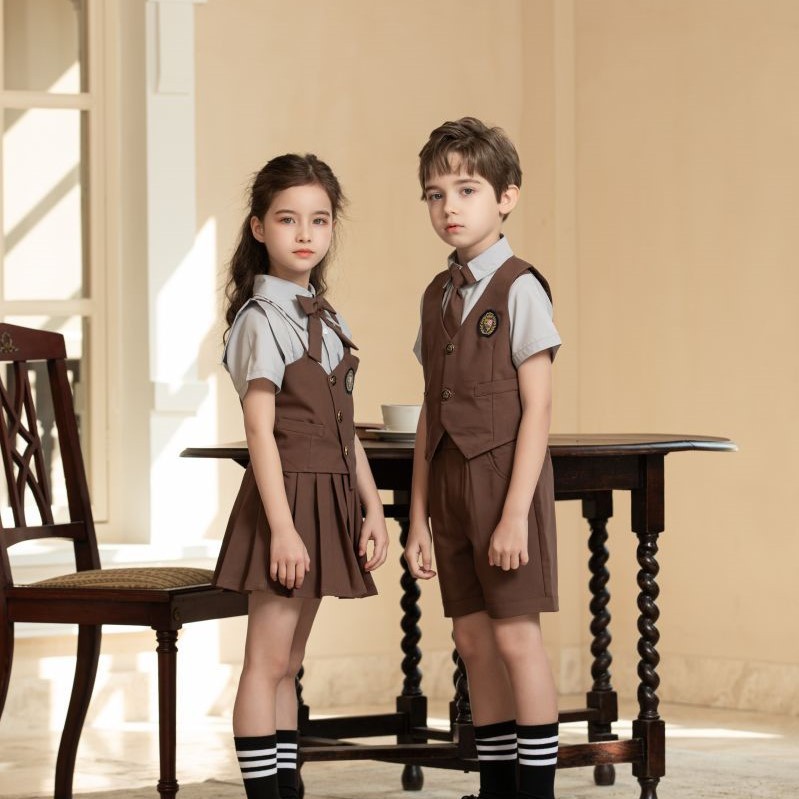
Second, it looks sloppy and unkempt. School uniforms are worn every day—if they're too baggy, kids just look lethargic. This is especially true for formal uniform styles—blazers, shirts, pleated skirts—which are designed to be more fitted. Sizing up makes them look especially messy.
Third, cuffs get dirty fast and are harder to clean. Kids' cuffs are like mobile dirt collectors—they rub on desks, touch toys, grab snacks, and turn black within half a day. A well-fitting uniform can be protected with sleeve covers, but if you size up, the covers don't reach the overly long cuffs, and dirt gets ground right into the fabric—near impossible to wash out.
Fourth, anything more than one size up is basically unwearable. One size up is still manageable—two sizes up is a disaster: cuffs and hems are visibly too long, and kids trip or snag on things constantly.
So sizing up isn't a hard no—it's a case-by-case decision.
First, it's uncomfortable and gets in the way. Sleeves bunch up at the wrists, trousers drag on the ankles, and kids trip over their own hems during PE. Some kids come home complaining, "I can't raise my arms"—because the jacket is so big that when they lift their arms, the shoulder seams sit in the wrong place and restrict movement.
Second, it looks sloppy and unkempt. School uniforms are worn every day—if they're too baggy, kids just look lethargic. This is especially true for formal uniform styles—blazers, shirts, pleated skirts—which are designed to be more fitted. Sizing up makes them look especially messy.
Third, cuffs get dirty fast and are harder to clean. Kids' cuffs are like mobile dirt collectors—they rub on desks, touch toys, grab snacks, and turn black within half a day. A well-fitting uniform can be protected with sleeve covers, but if you size up, the covers don't reach the overly long cuffs, and dirt gets ground right into the fabric—near impossible to wash out.
Fourth, anything more than one size up is basically unwearable. One size up is still manageable—two sizes up is a disaster: cuffs and hems are visibly too long, and kids trip or snag on things constantly.
So sizing up isn't a hard no—it's a case-by-case decision.
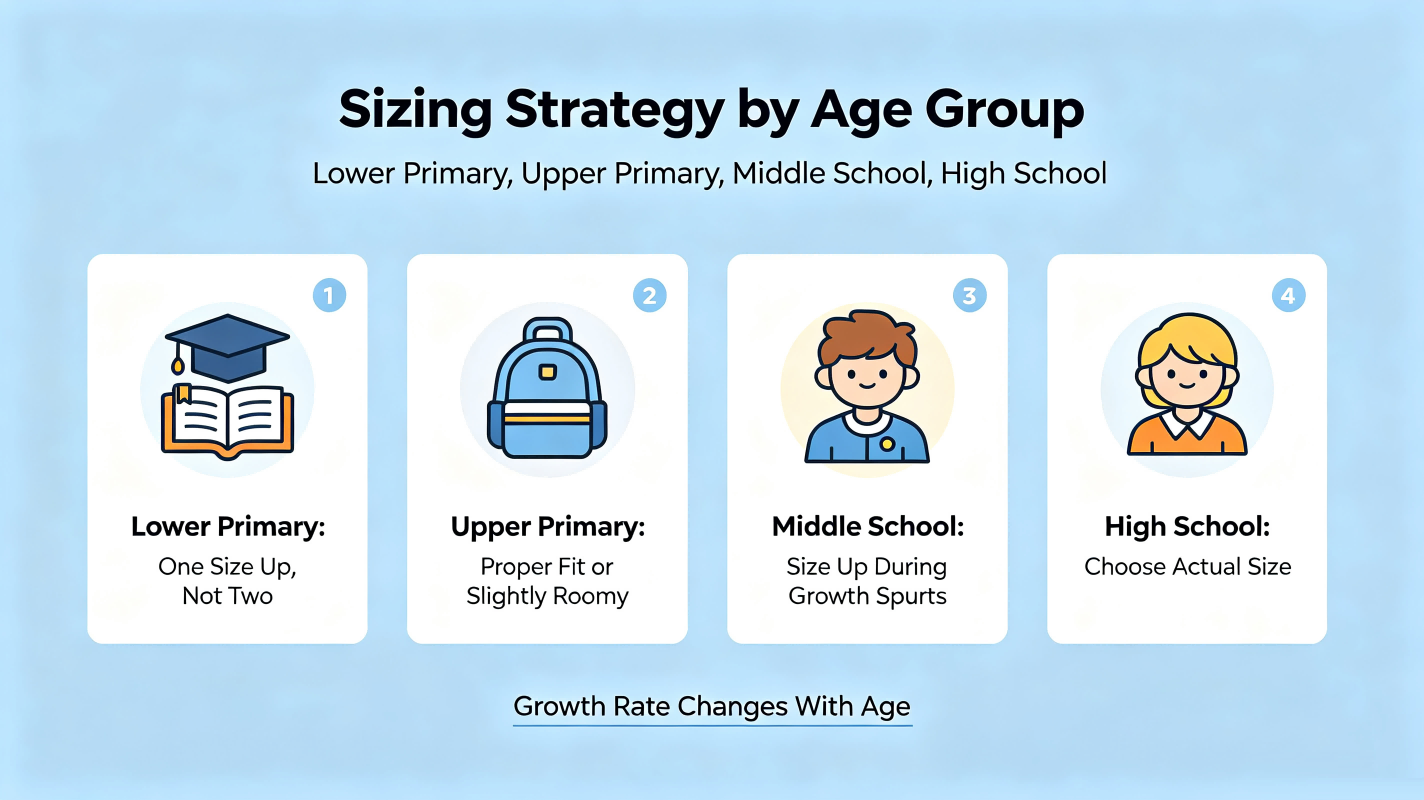
4. Different age groups call for completely different sizing strategies
Lower primary (grades 1–3): one size up is reasonable
This is the fastest-growing stage—kids can gain 5–8 cm in six months. A common rule of thumb from experienced parents is "height + 10 cm"—for example, a 120 cm child picks size 130.
But don't overdo it: one size up is fine, two is too much. You can also separate tops and bottoms—if your child is growing tall but staying slim, size up on the top but keep the trousers fitted—that makes more sense than buying everything oversized.
Upper primary (grades 4–6): proper fit or slightly roomy
Growth becomes more stable. Growing 5–7 cm a year is normal—a proper-fit uniform can easily last a year. At this age, body shapes start to vary more, so pay more attention to chest and waist measurements.
Middle school: depends on growth rate
First-year middle schoolers are entering puberty—some shoot up dramatically, so you can size up a bit. Boys grow 7–9 cm a year, girls 6–8 cm—a uniform really won't last long at that pace.
But after the second and third years, growth slows down—you can go with the proper fit. Middle school uniforms are worn every day, so a proper fit is more practical for daily activities.
High school: go with the actual size
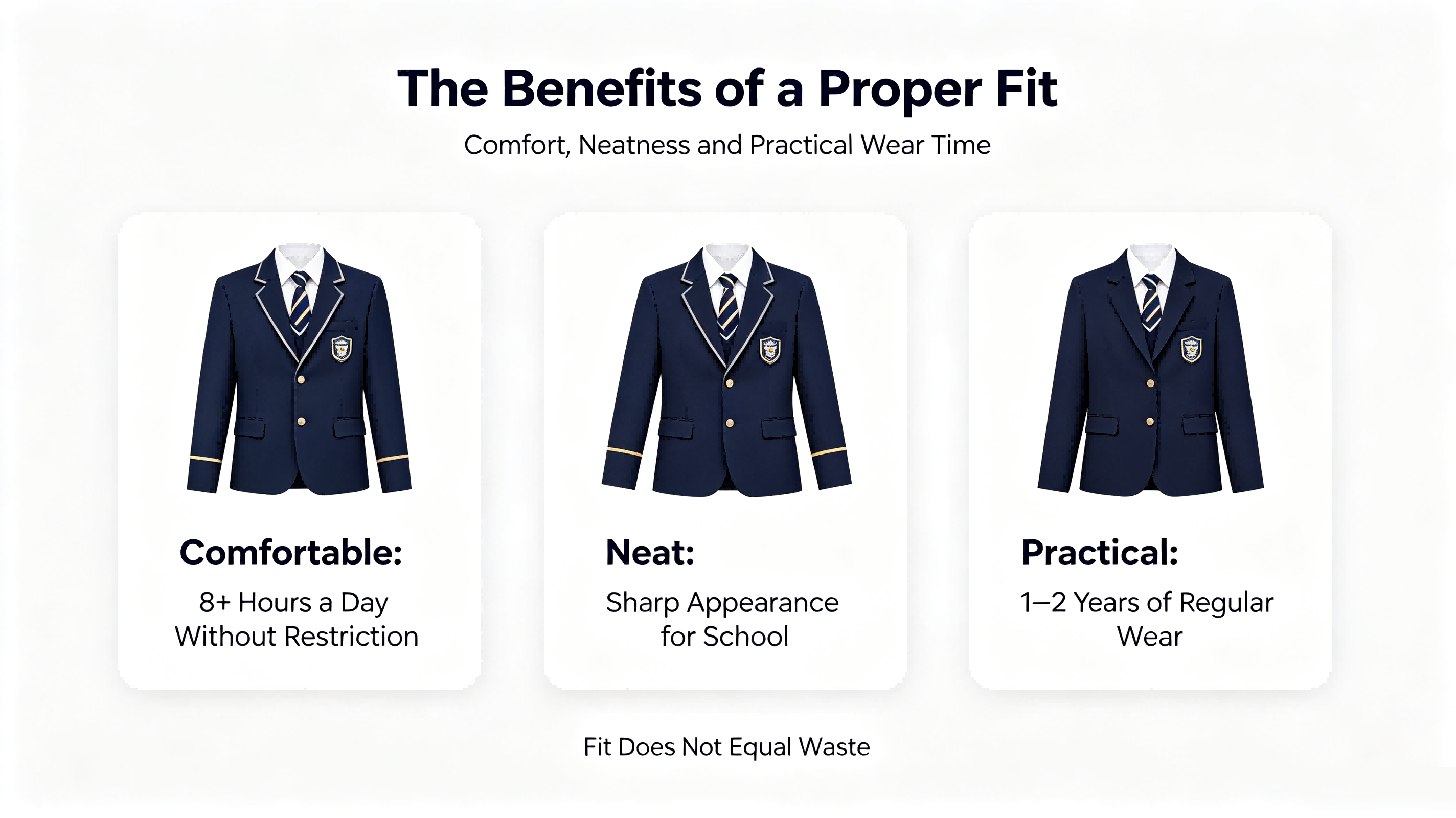
High schoolers are basically done growing. Their uniforms are usually worn for three years—a proper fit will serve them longest, and there's no need to leave extra room.
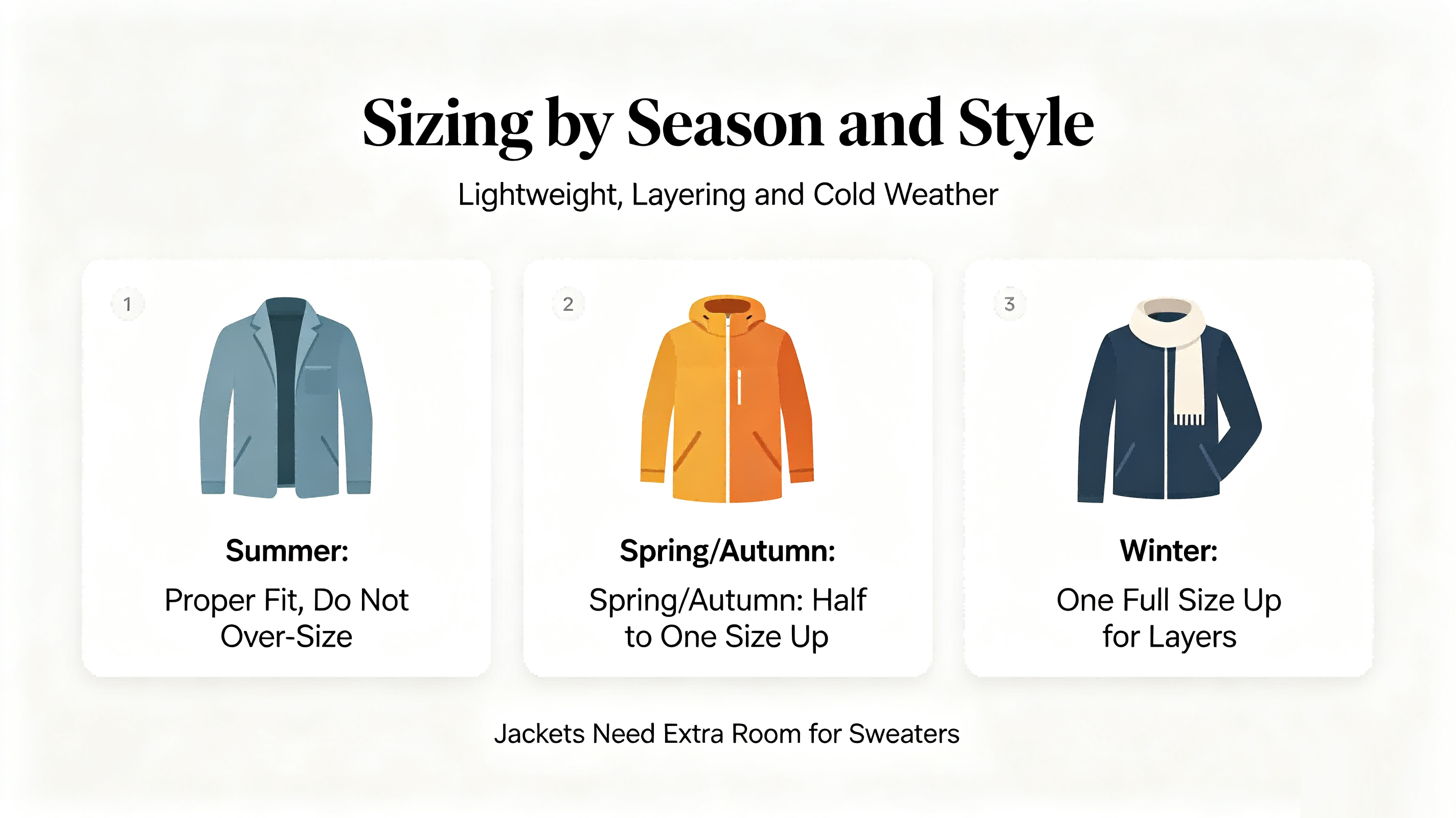
5. Different seasons and different styles need different approaches
Summer uniforms: proper fit, don't size up
Summer fabrics are light – too big and they look limp and messy. For short-sleeved T-shirts, shoulder width should be within about 2 cm of the actual shoulder width. In summer, you're wearing fewer layers anyway—a bigger size just looks baggy.
Spring/autumn uniforms: can be a bit roomy
You'll be wearing a base layer underneath, and kids are more active—you can go half a size to one full size up from the normal fit. A common tip from parents is to use "height + 5 cm" for spring/autumn wear.
Winter uniforms: leave room for layers
Thermal underwear and sweaters go underneath—you need extra space. Size up by one full size to make sure it's not too tight with thicker clothes. For winter jackets, look for removable inner linings, and leave about 3 cm extra in the garment length.
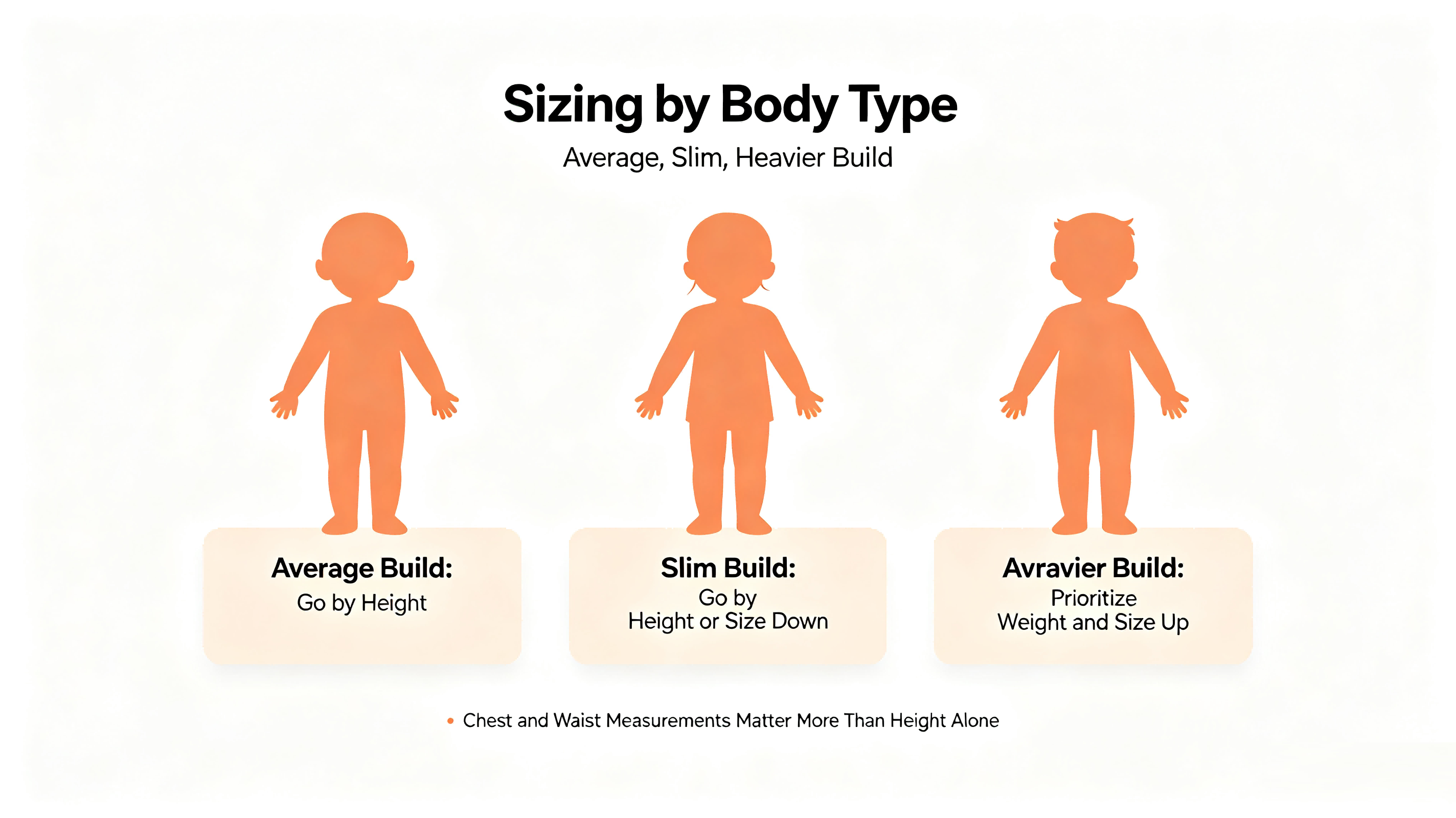
6. Different body types – what to do?
l Average build: go by height. If your child is fairly average, just match their height to the "reference height" on the chart.
l Slim build: go by height, or even size down. A slim child in the height-matched size may end up swimming in it. This is especially true for summer uniforms—thin and loose fabrics make an oversized one look particularly untidy.
l Heavier build: go by weight, and size up if needed. Height-based sizing will often be too small. Prioritise weight instead of height. Pay special attention to chest and waist measurements—don't let it pinch around the belly.
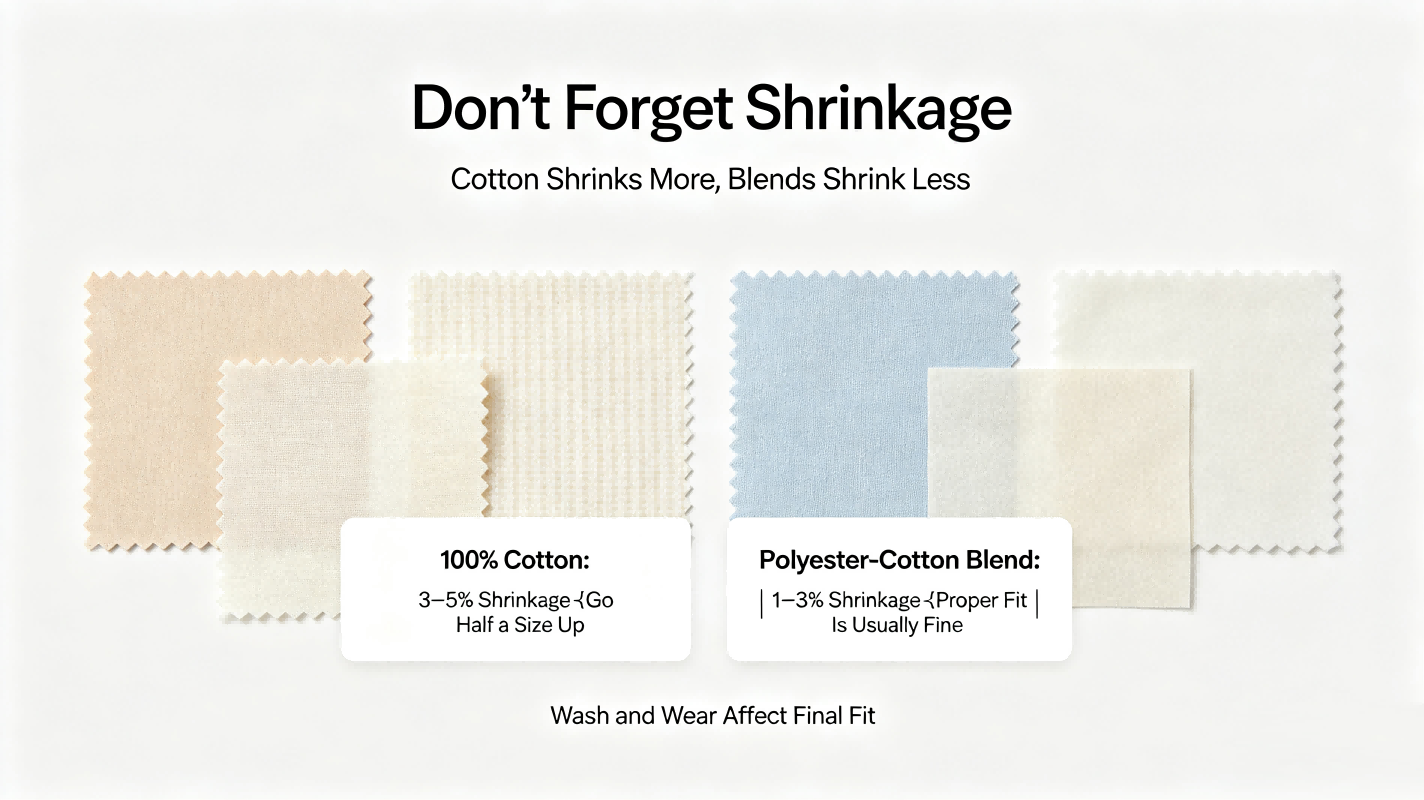
7. Don't forget about shrinkage
Uniforms shrink after several washes. 100% cotton shrinks about 3–5%, while poly-cotton blends shrink 1–3%.
That means a 70 cm long pure cotton top could shrink to 66–68 cm after a few washes. If you bought it exactly right, it might become tight after washing.
Our advice: If the uniform has a high cotton content, go up half a size to allow for shrinkage. If it's a low-cotton poly-cotton blend, shrinkage is minimal—proper fit is fine.
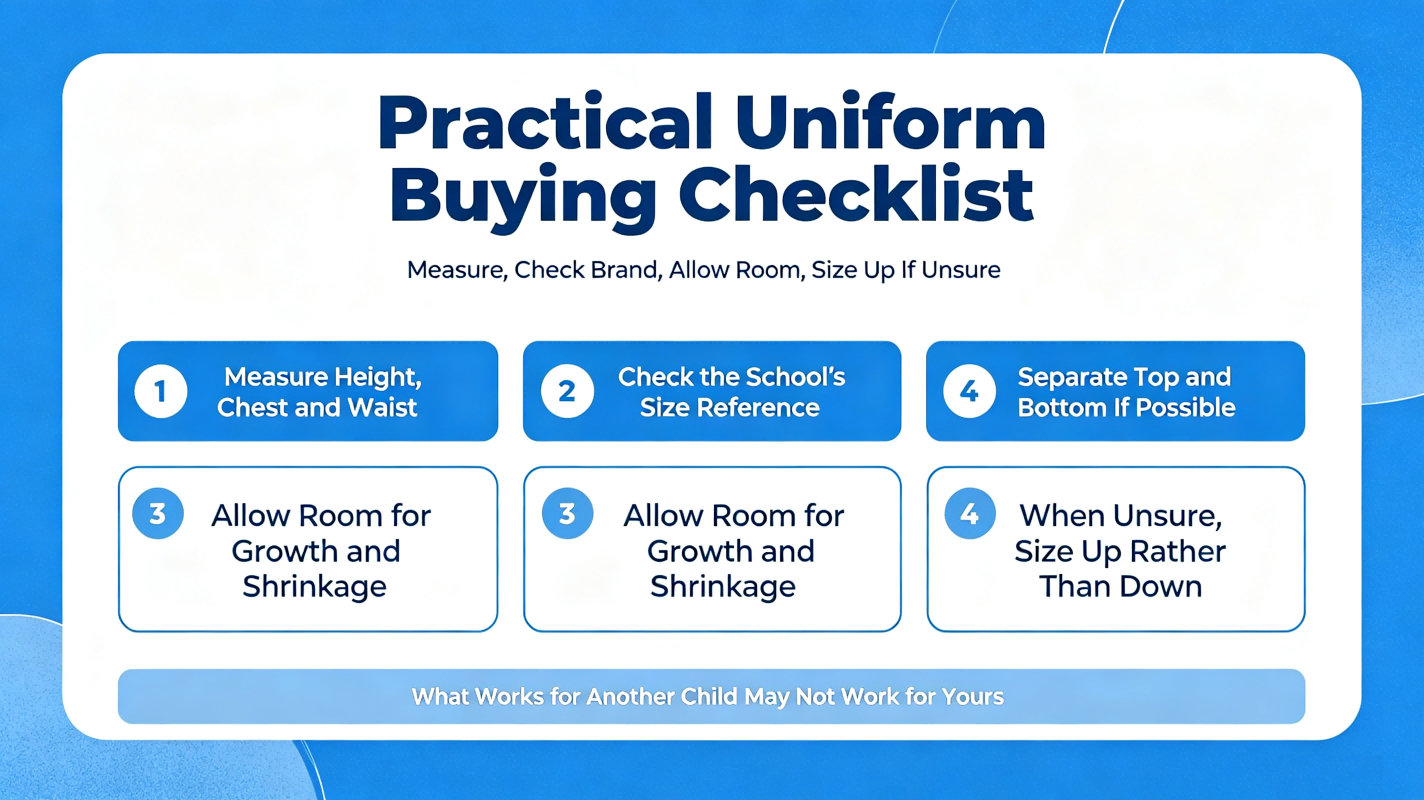
8. Some practical takeaways
l First, measure accurately. For height, have your child stand straight against a wall without shoes, and measure from the floor to the top of the head. For chest, measure horizontally around the fullest part under the armpits.
l Second, don't just look at height – weight matters too. Two kids of the same height but with a 5 kg weight difference will wear the same size completely differently.
l Third, sizes vary between brands. Some run large, some run small. If it's a school-wide bulk order, try to check a sample or the school's sizing reference first.
l Fourth, if you're really unsure, go bigger rather than smaller. A slightly big uniform can still be worn; a small one is completely useless. Especially for school orders with no exchange option—better to size up than to end up with something too tight.
l Fifth, tops and bottoms can be sized separately. Some kids grow faster in the upper body, others in the legs. If the school allows separate ordering, choosing different sizes for top and bottom is perfectly fine.
One last honest word
Whether to size up or get the exact fit—there's no one-size-fits-all answer. It comes down to three things: your child's age stage, the uniform's season and style, and your child's specific build.
Younger fast-growers can go a bit bigger; older primary and high school kids should go with the proper fit. Summer uniforms – don't size up; winter uniforms – leave room for layers. Average build – go by height; heavier build – go by weight.
Once you've got these points down, the next time you're choosing a uniform, you'll have confidence. No need to ask the parent group "what size did you get?"—because what works for someone else's kid may not work for yours.