Что же вы ищете?


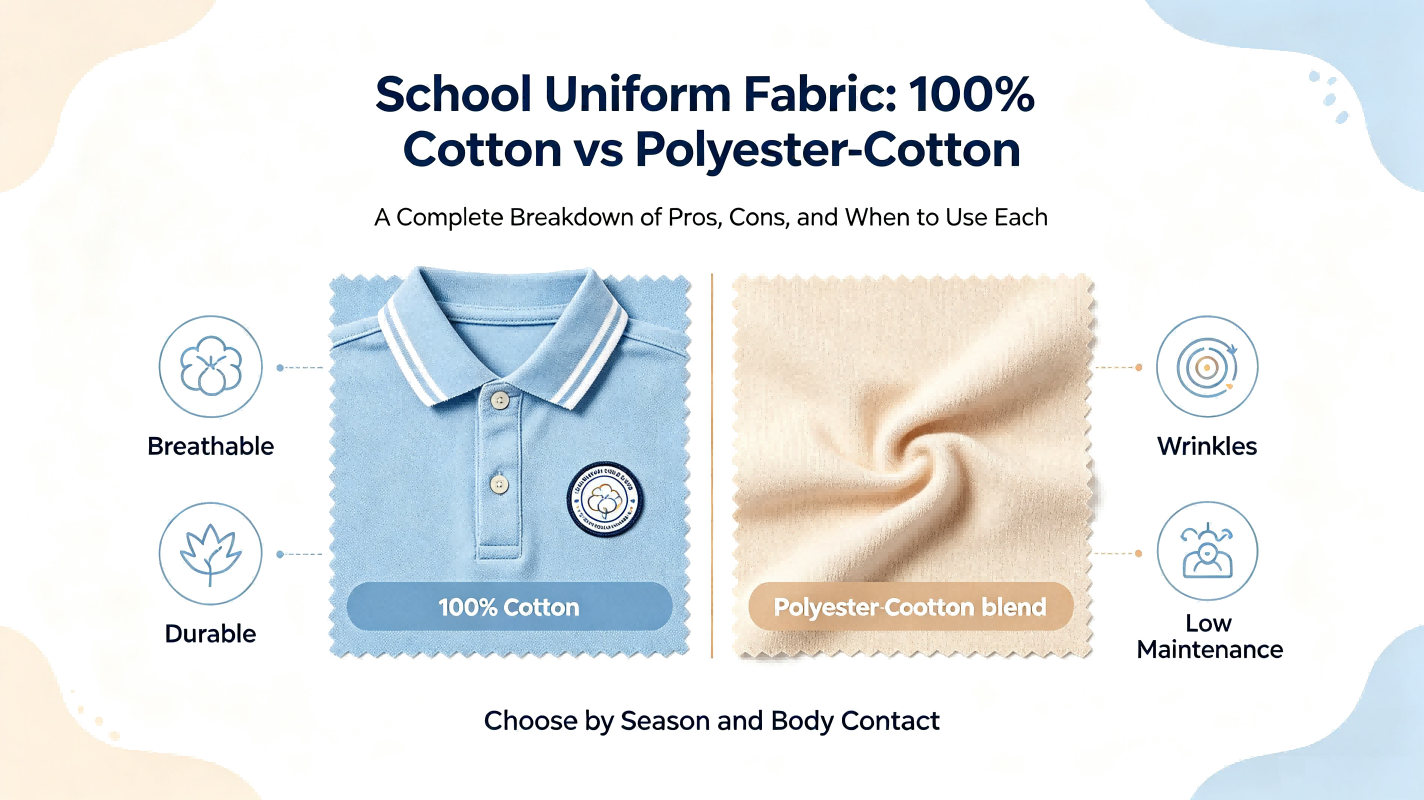
A lot of parents get stuck on this question when buying school uniforms: should I go with 100% cotton or a polyester-cotton blend? Some people say cotton is comfortable and breathable; others say poly-cotton is durable and easier to wash. Let's break both fabrics down in plain language, so by the end you'll know exactly what to look for.
First, 100% cotton: natural and skin-friendly, but far from perfect
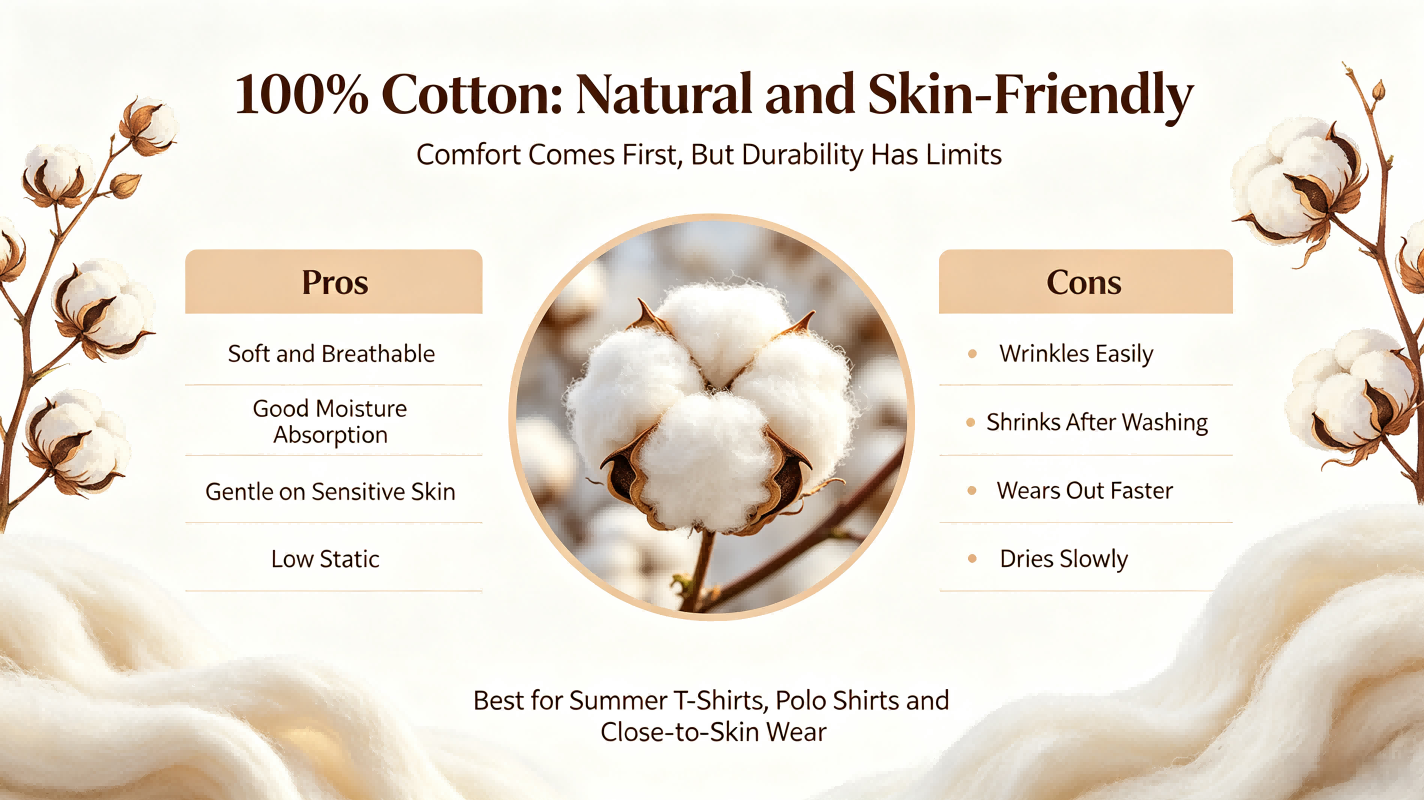
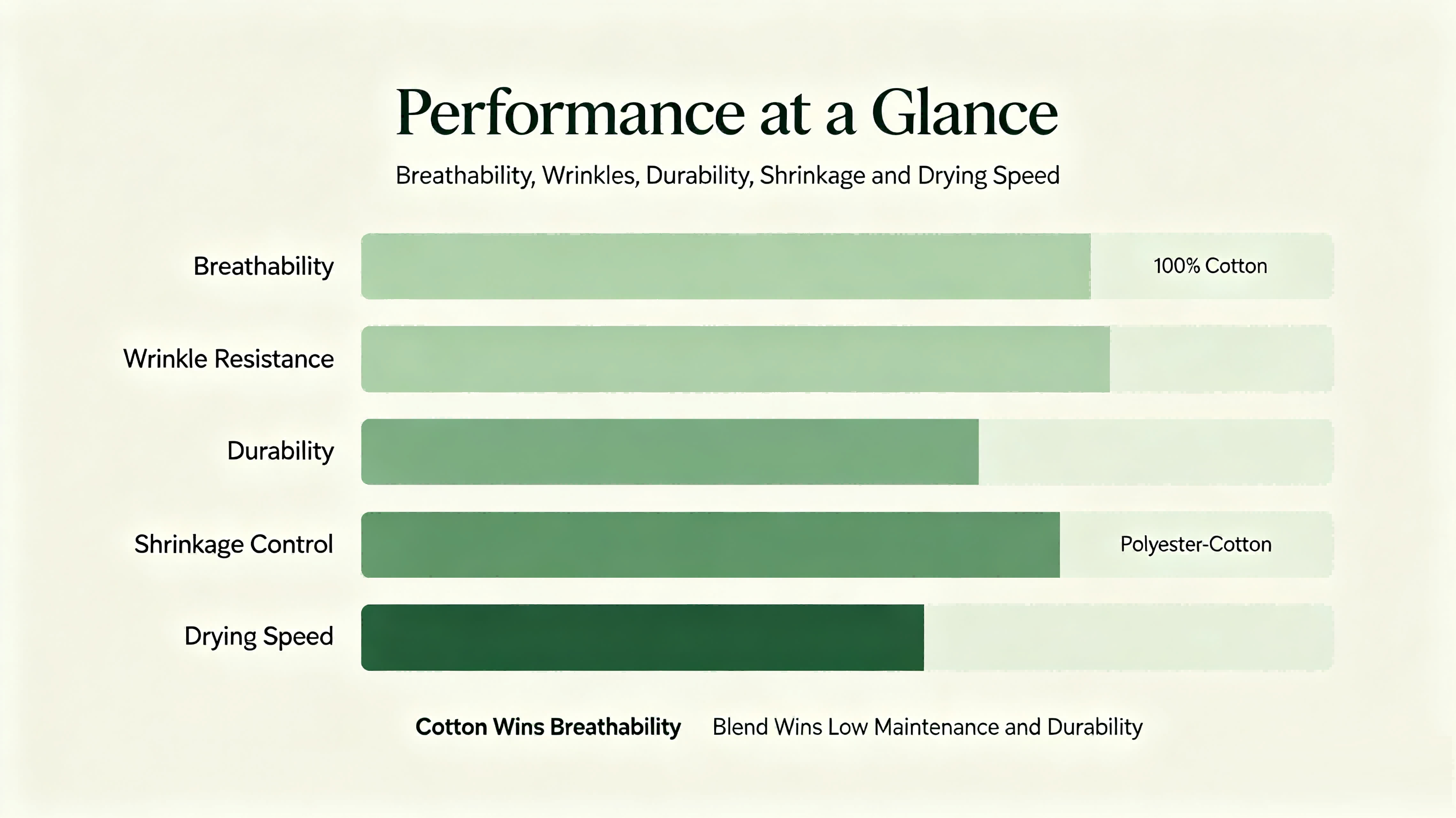
100% cotton is exactly what it sounds like—natural fibers spun from cotton plants. No mystery there. Its strengths are things you can feel: softness, breathability, and moisture absorption. When your kid runs around all morning and works up a sweat, a cotton shirt pulls that sweat away from the skin so it doesn't stick. It feels comfortable. Cotton fibers are gentle on skin, so even kids with sensitive skin usually don't have issues wearing it next to their bodies. Plus, cotton doesn't build up static electricity much—no annoying zaps when taking off a sweater in winter.
--------------占位---------------
But cotton has some real downsides.
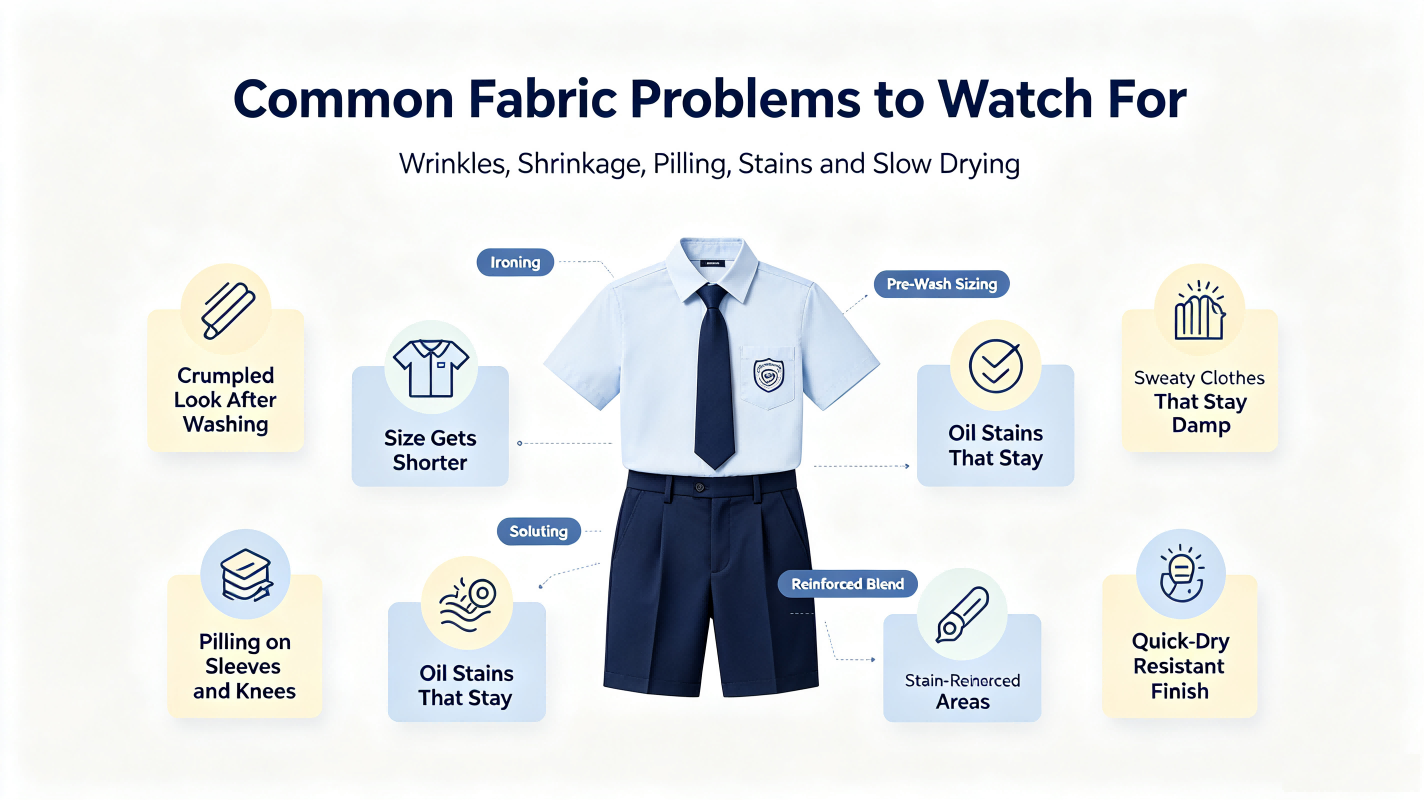
l First, it wrinkles like crazy. After washing, if you don't iron it, a cotton shirt looks like a crumpled napkin. Your kid wearing a wrinkled uniform to school doesn't look great, and honestly, they don't feel great in it either.
l Second, it shrinks. Cotton shrinks after washing. You buy the right size, and after a few washes it's suddenly too short. Parents end up buying a size up to leave room for shrinkage, but then it looks baggy and doesn't fit well.
l Third, it wears out fast. Kids run, jump, scrape, and fall all day at school. Cotton can't handle that kind of abuse. Knees, elbows, and cuffs are the first to go.
l Fourth, it dries slowly. Cotton is great at soaking up moisture, but it's lousy at letting it go. After gym class, a sweaty cotton shirt stays wet all afternoon, and your kid walks around in damp clothes—not great for staying healthy.
So when does cotton make sense? Summer T-shirts, polo shirts, and other items worn directly against the skin, or anything where comfort is the top priority.** But if you expect a 100% cotton uniform to last an entire school year and still look new, you're asking for too much.
--------------占位---------------
Now, polyester-cotton blends: the best of both worlds
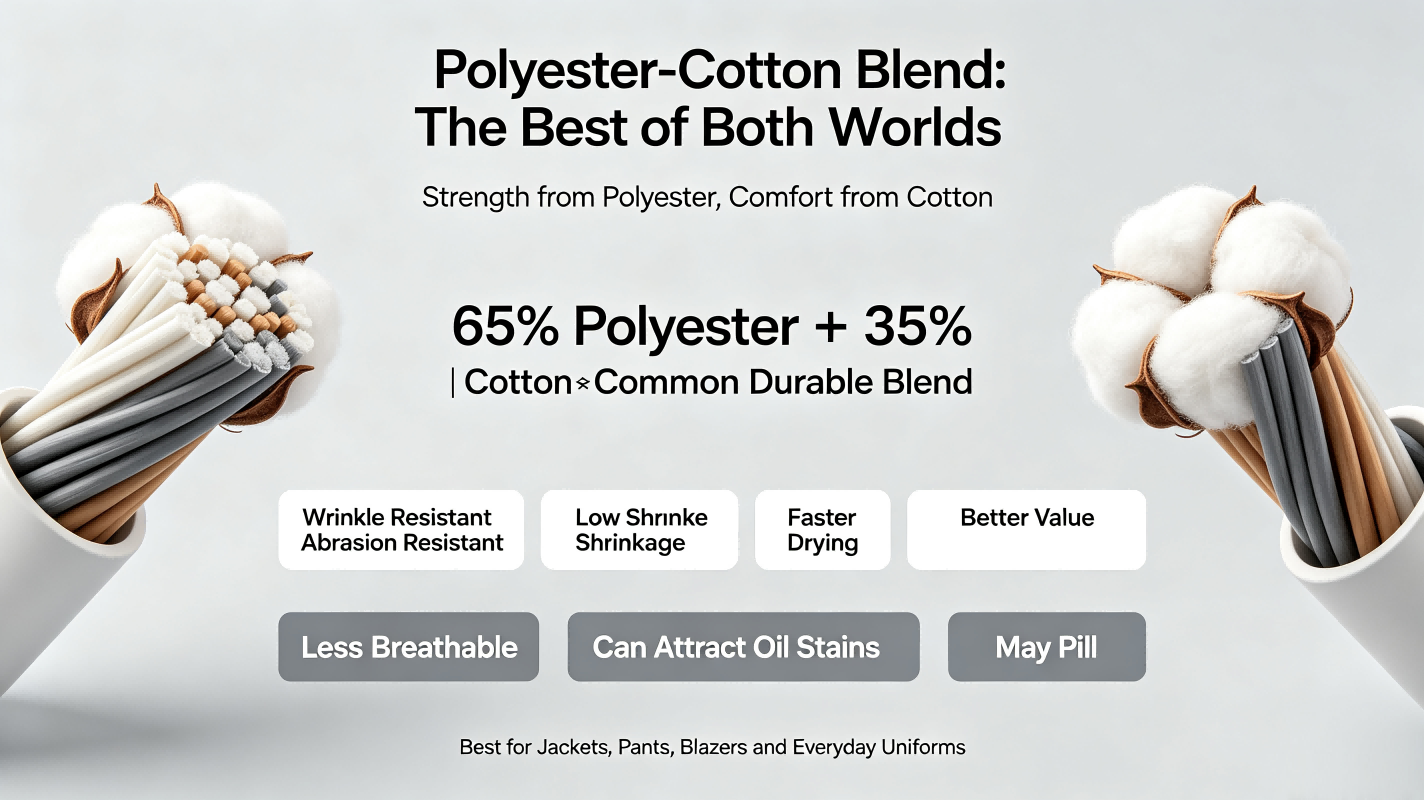
Poly-cotton is simply a mix of polyester (synthetic fiber) and cotton. Common blends are 65% polyester / 35% cotton, 60/40, 50/50, and so on. Polyester acts as the "backbone"—it gives strength, wrinkle resistance, and shape retention. Cotton provides the "soul"—absorption, breathability, and a soft feel against the skin.
The advantages of poly-cotton are very real.
l Wrinkle resistance is its biggest win. After washing and hanging to dry, it's pretty much flat—no ironing needed, which saves parents a ton of hassle.
l Durable and long-lasting. Polyester fibers are 1.5 to 2 times stronger than cotton, and abrasion resistance can be up to 40% higher. Kids can wear these to school, play ball, sit on the floor—it holds up.
l Low shrinkage. The size barely changes after washing. Buy the right fit and it stays that way, no sudden length loss.
--------------占位---------------
l Low shrinkage. The size barely changes after washing. Buy the right fit and it stays that way, no sudden length loss.
l Dries faster. Polyester doesn't absorb water; only the cotton portion holds moisture, so overall drying time is much shorter than pure cotton.
l Better value for money. Poly-cotton costs less to produce than 100% cotton, so for the same budget you can get a more durable uniform.
Of course, it has downsides too.
l Less breathable than cotton. In summer, if the cotton content is on the low side, poly-cotton can feel stuffy and trap sweat.
l More static cling. Polyester is synthetic, so in dry weather it builds up static, which attracts dust and makes clothes cling.
--------------占位---------------
l Attracts oily stains. Polyester has an affinity for oils—if your kid spills a bit of sauce at lunch, it's harder to wash out than on cotton.
l Pilling. Blends with lower cotton content tend to form little fuzz balls in high-friction areas, which looks worn over time.
So where does poly-cotton shine? Spring/fall jackets, winter uniforms, everyday pants, and formal blazers or suits. These aren't worn directly against the skin, and they need to be tough and low-maintenance—poly-cotton is a great choice.
What does the national standard say?
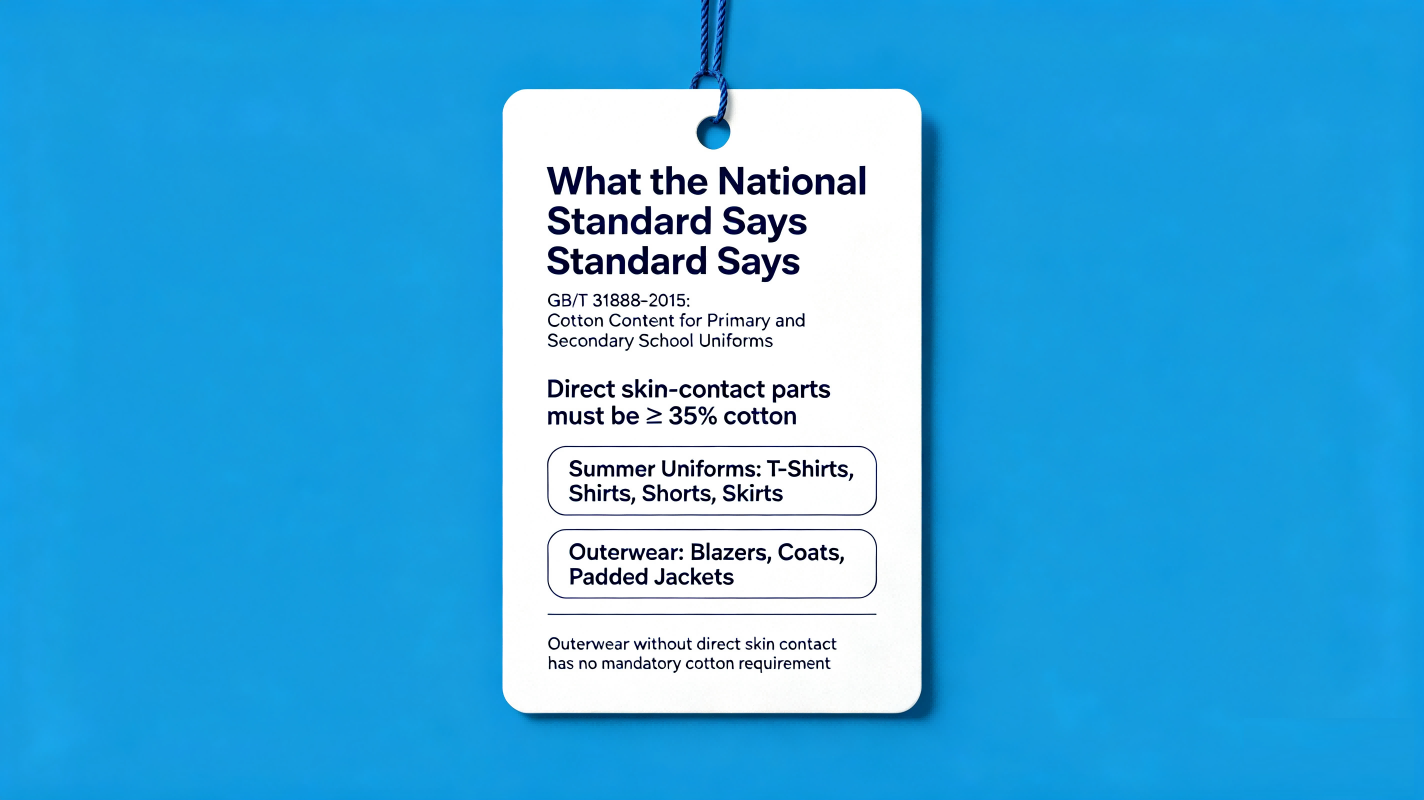
A lot of parents don't know this, but China actually has a mandatory standard for cotton content in school uniforms. According to GB/T 31888-2015 "School uniforms for primary and secondary school students", for any part that comes into direct contact with skin, the labeled cotton fiber content must be no less than 35%.
--------------占位---------------
What does that mean in practice? Summer uniforms—T-shirts, shirts, shorts, skirts—must have cotton content ≥35%. But spring/fall outfits, blazers, winter coats, and padded jackets—things not worn directly against the skin—don't have a mandatory cotton requirement.
The purpose of this standard is clear: to prevent schools from using cheap, fully synthetic fabrics for the parts that actually touch kids' bodies, and to ensure basic comfort.
Many schools go even stricter than the national standard. Some regions require at least 50% cotton in summer uniforms; others go with 94% cotton + 6% spandex for T-shirts. When you're shopping, just flip the tag and see what the cotton percentage says.
So how do you choose? A practical take for parents
There's no single "better" fabric—it all depends on where and when it's worn.
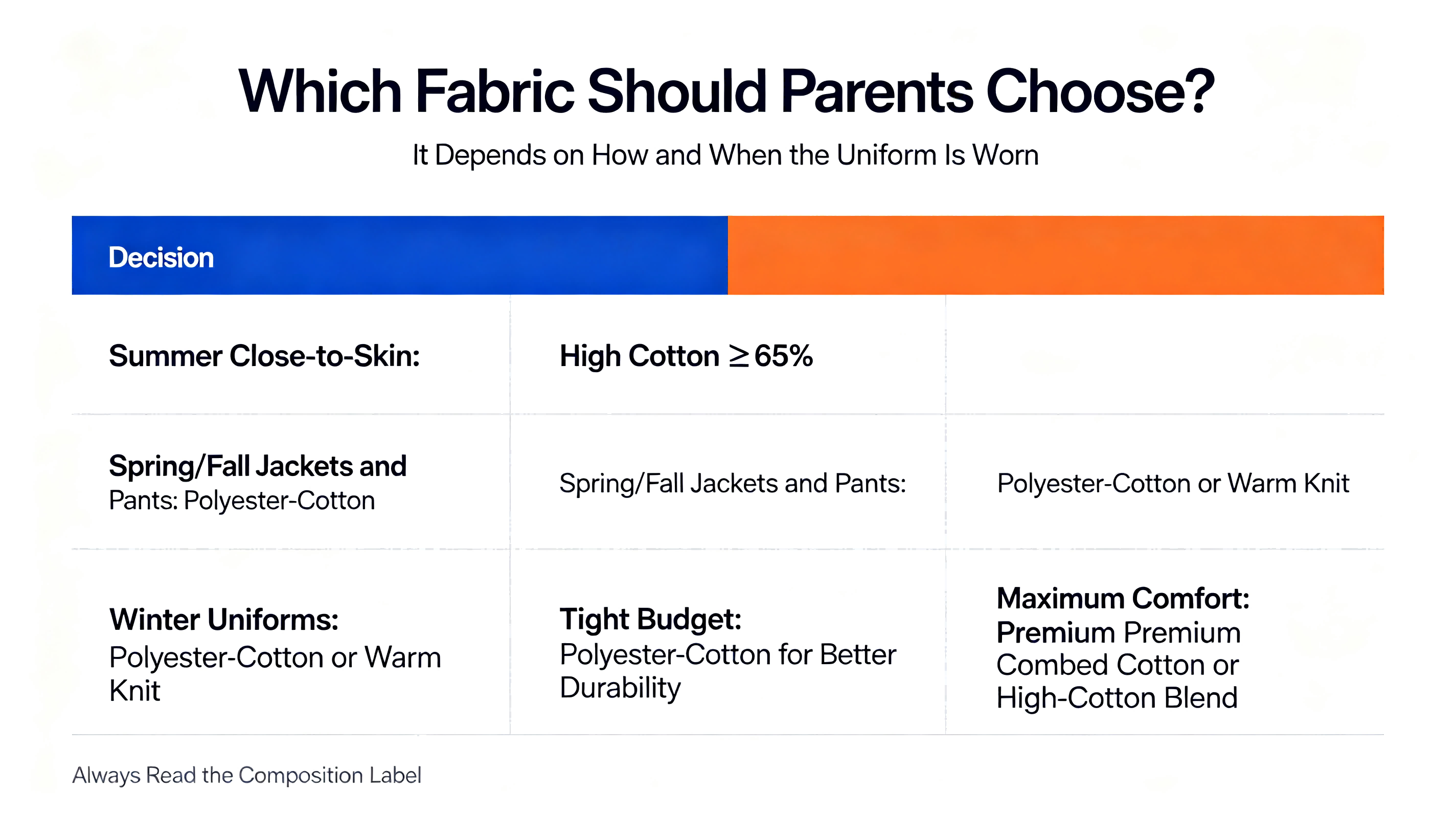
l For summer items worn against the skin – Go for high cotton content, ideally above 65%. 100% cotton or a high-cotton blend both work—breathability and sweat absorption come first.
--------------占位---------------
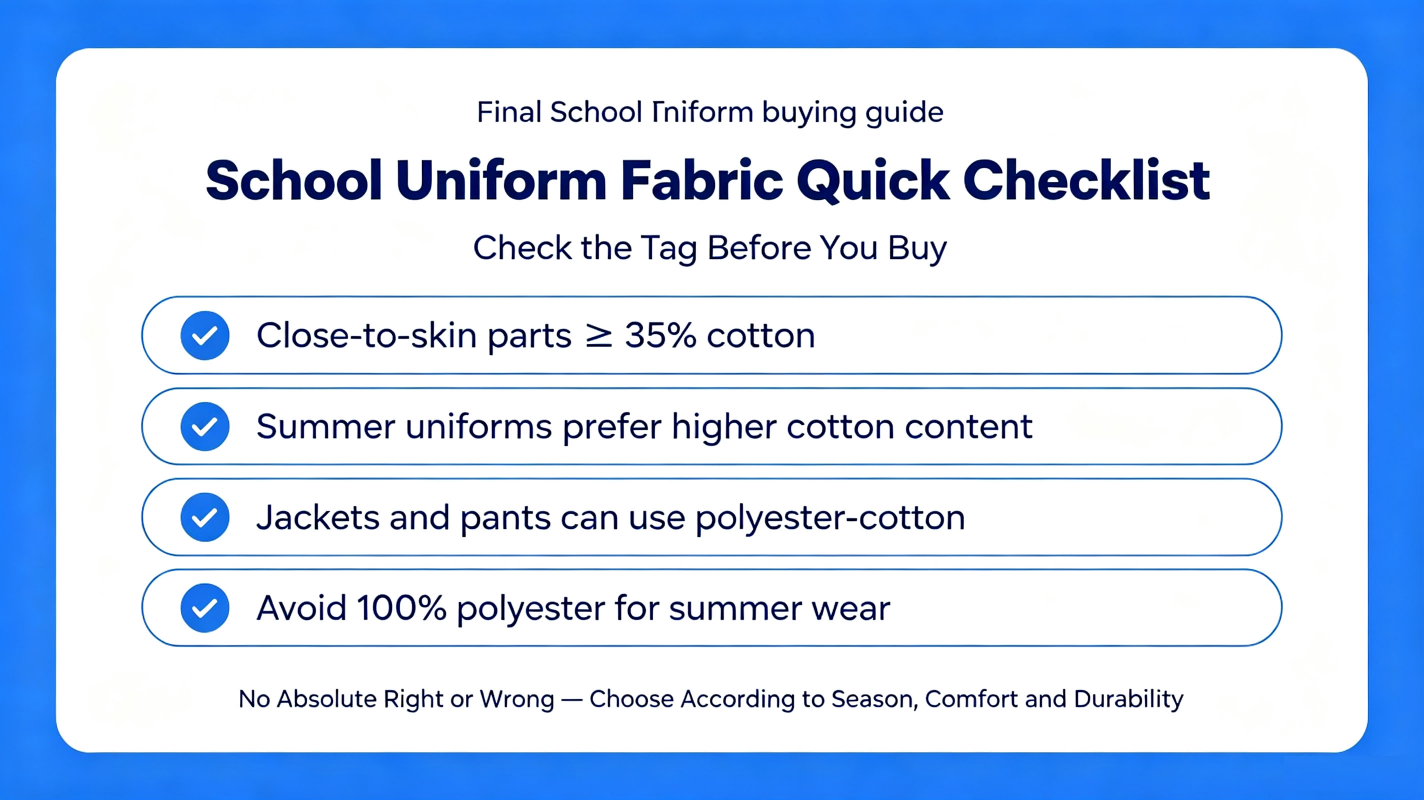
l For spring/fall jackets and pants – Poly-cotton is the smart value choice. Wrinkle-resistant and tough, no daily ironing, and kids can abuse them all they want.
l For winter uniforms – Poly-cotton or a "cotton-over-poly" knit (a common blend for warmth) is fine. Warmth comes from thickness and insulation, not the face fabric.
l If you're on a tighter budget – Poly-cotton is cheaper than pure cotton, so you can get better construction and more durable wear for the same money.
l If you have more to spend and want maximum comfort – Go for premium combed cotton or a high-ratio cotton blend.
One last reminder: when you buy uniforms, turn over the tag and read the composition label. If the part that touches skin has less than 35% cotton, it doesn't meet national standards. And if the tag says "100% polyester" and claims to be a summer uniform, you might want to walk away.
--------------占位---------------
There's no absolute right or wrong—just what fits the need. Once you understand each fabric's strengths and weaknesses, choosing gets a whole lot easier.
--------------占位---------------