
< img height="1" width="1" style="display:none" src="https://www.facebook.com/tr?id=1542626200451067&ev=PageView&noscript=1" />
Что же вы ищете?
How to Balance Warmth and Protection in Winter Security Uniforms? A Guide to Fabric Selection and Layering Structure7
Главная

How to Balance Warmth and Protection in Winter Security Uniforms? A Guide to Fabric Selection and Layering Structure7

How to Balance Warmth and Protection in Winter Security Uniforms? A Guide to Fabric Selection and Layering Structure7

2026-04-28

   The core challenge of winter security uniforms lies in striking a precise balance between warmth, protection, and operational flexibility. A well-designed winter uniform system protects officers in harsh conditions, maintains high visibility for safety, preserves a professional silhouette, and allows unrestricted movement during active duty. The solution is not a single heavy coat, but a scientifically structured three-layer system tailored to the specific risks and activity levels of each post.

   This guide explains how to select the right fabrics, build an effective layering structure, and match the uniform configuration to your operational environment.

The Three-Layer System: Science-Backed Cold Weather Protection

A single heavy coat cannot adapt to changing conditions. Officers moving from a frigid outdoor patrol to a heated control room, or from stationary guard duty to a foot chase, need a system that can be adjusted on the go. The three-layer system—widely adopted by military and law enforcement—provides this adaptability while delivering superior thermal efficiency.

In tests, this layered structure can make the perceived temperature over 5°C warmer than wearing a single thick cotton coat in conditions of -10°C with Level 6 wind (approx. 50 km/h gusts).

  • #
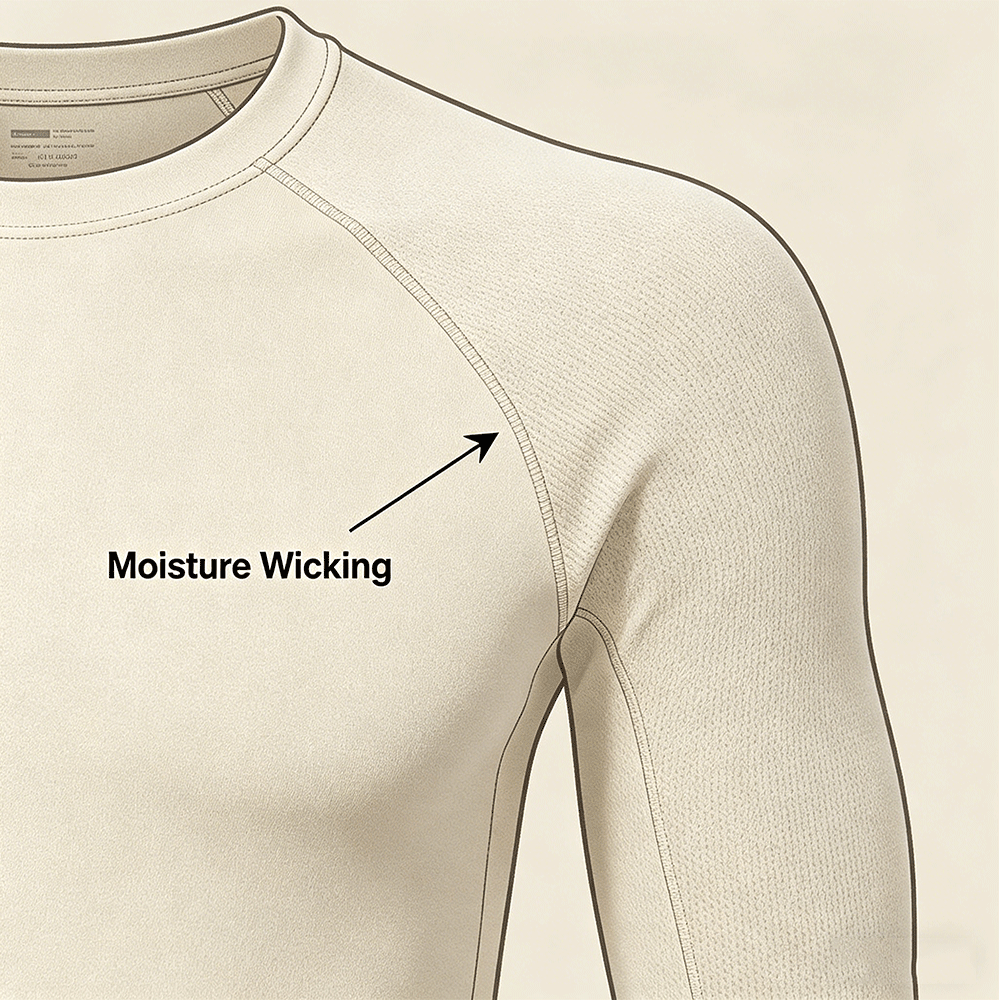
    Layer 1: Base Layer (Moisture Management)
    Purpose: Wicks sweat away from the skin. Wet skin loses heat up to 25 times faster than dry skin.
    Fabrics: Polyester, nylon, or Merino wool.
    Critical Rule: Avoid cotton entirely. Cotton absorbs moisture, stays wet, and completely loses its insulating ability once damp.
    Practical Choice: For extreme cold or static posts, Merino wool offers superior natural insulation even when damp, plus antimicrobial properties for extended wear.
  • #
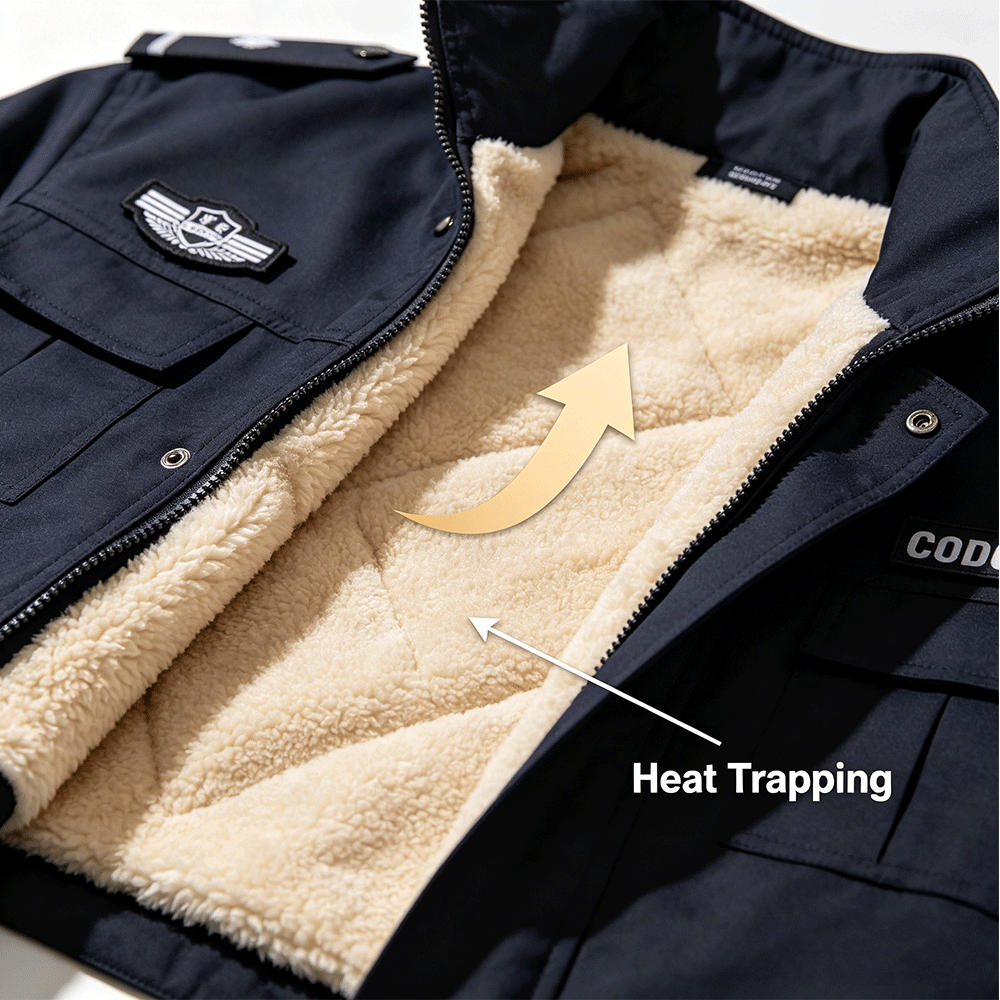
    Layer 2: Mid Layer (Insulation)
    Purpose: Traps body heat while remaining breathable enough to let moisture from the base layer escape.
    Fabrics: Fleece, high-loft synthetic fill, or heavyweight wool.
    Security-Specific Options:
        1.A long-sleeve security polo or crew neck sweatshirt works well for moderate cold, maintaining a professional silhouette without the casual look of a hoodie.
       2.For extreme cold, a detachable down or synthetic inner jacket (800+ fill power down, or 260–300 g/m² polyester/wool batting) provides maximum insulation while allowing easy removal indoors or during high activity.
    Recommendation: A detachable inner liner is strongly advised—it simplifies washing and allows officers to configure their uniform based on daily conditions.
  • #
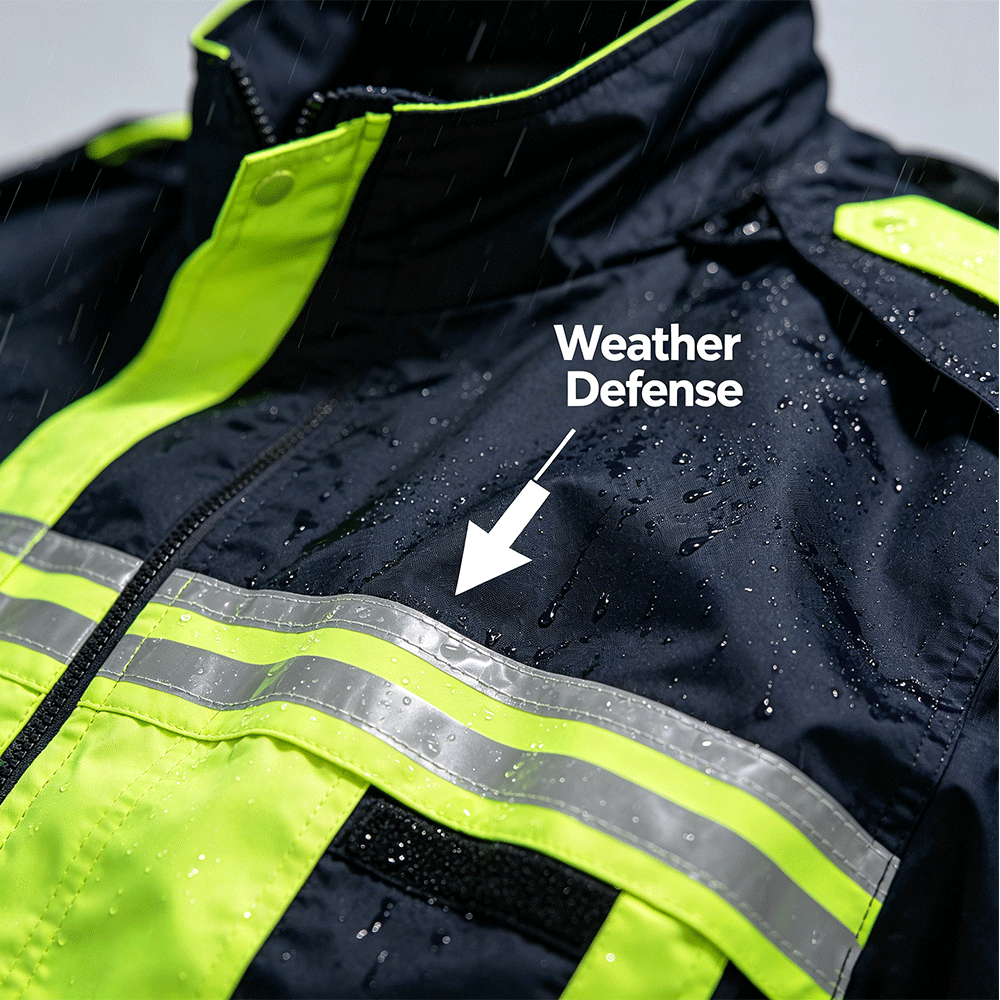
    Layer 3: Outer Layer (Weather Defense)
    Purpose: Shields against wind, rain, and snow while allowing internal moisture vapor to escape.
    Fabric Requirements:
      1.Tightly woven shell fabric with a weight under 200 g/m² to avoid excessive bulk.
      2.PU coating or waterproof-breathable membrane for water resistance.
      3.Wind resistance rated at Grade 5 or above.
      4.Moisture vapor transmission rate ≥ 10,000 g/m²/24h to prevent sweat buildup.
    Design Features:
      1.Reflective strips must be integrated onto the outer layer—high visibility is a non-negotiable safety requirement for any winter security uniform.
      2.The fabric must be abrasion-resistant to withstand daily patrol wear and equipment contact.
    Avoid: Standard thin poly-cotton or low-density synthetic shells that allow wind penetration (wind chill effect).. 

Choosing the Right Fabric: A Quick Reference

Fabric Type Best For Key Benefits
Polyester Daily patrols Extremely durable, wrinkle-resistant, quick-drying
Merino Wool Cold & static duty Excellent natural insulation even when damp; antimicrobial
Poly-Cotton Blend Professional core uniform Balances warmth with breathability for active duty
Nylon / High-Density Shell Outer layer Superior wind and water resistance; lightweight
Fleece Mid layer insulation High warmth-to-weight ratio; breathable; fast drying
Down (800+ FP) or Synthetic Fill Extreme cold inner liner Maximum heat retention; detachable for flexibility

Design & Construction: Features That Matter

  • Sealed Seams
    All outer layer seams should be taped or sealed to prevent cold wind and water seepage through stitch holes.
  • Wind-Blocking Closures
    Adjustable cuffs, elasticized or drawcord hems, and stand-up or high collars minimize cold air penetration at openings.
  • Articulated Fit
    Pre-shaped knees and elbows, underarm gussets, and elastic stretch panels ensure full range of motion without creating gaps for wind entry.
  • Reinforced Stress Points
    Double-stitching at shoulders, pocket edges, and inseams extends garment life under demanding conditions.
  • Hardware Durability
    Zippers and fasteners must withstand cold-weather use (won't seize or snap) and repeated cycling.

Configuring by Role and Climate

Winter conditions vary dramatically by region and assignment. A one-size-fits-all approach fails in practice.

  • Northern Dry Cold (below -10°C)
    Prioritize maximum wind protection plus a high-insulation inner liner. Wind chill is the primary enemy.
  • Southern Damp Cold (0–10°C)
    Emphasize wind resistance and moisture-wicking base layers. In high-humidity cold, staying dry is the key to staying warm.
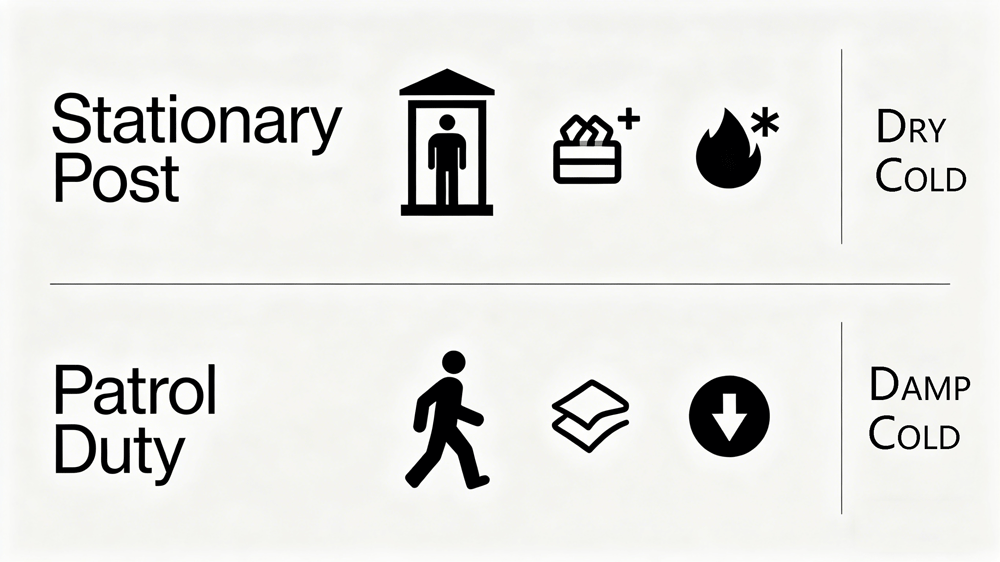
  • Patrol / Active Duty
    Lightweight, high-stretch outer fabric with a moderate mid layer. Officers generate body heat through movement; the priority is avoiding sweat buildup that leads to post-activity chilling.
  • Stationary / Gate Guard Duty
    Heavy insulation focus. Static officers lose body heat rapidly; thicker mid layers and a fully windproof outer shell are essential.

Purchasing and Maintenance Guidelines

Select by operational parameters: Match the uniform configuration to local temperature range, wind speed, humidity, and the officer's activity level (stationary vs. mobile).

Use the layering approach: A three-layer system is scientifically more effective and practically more adaptable than a single heavy garment.

Follow care labels strictly: Use neutral detergent; avoid bleach and high-temperature tumble drying, which can damage waterproof membranes, reflective tapes, and down fill.

Inspect regularly: Check reflective strip integrity, seam sealing, and zipper function at scheduled intervals. Compromised safety features must trigger immediate replacement.

Core Value: Why the Right Winter Uniform Matters

Investing in a properly engineered winter security uniform system delivers measurable returns:

Officer Health & Safety: Prevents cold-related injuries and illnesses, from frostbite to hypothermia risk during prolonged exposure.

Professional Image: A unified, sharp appearance—without the bulkiness of improvised layering—maintains public trust and organizational credibility.

Operational Effectiveness: A comfortable, focused officer is an effective officer. Reduced physical distraction from cold or sweat directly supports vigilance and response capability.

Duty of Care: Equipping frontline personnel with purpose-built protective clothing demonstrates organizational commitment to their well-being and professional dignity.

Golden Shield-это не только поставщик, но и надежная опора в вашей системе поставок. Мы помогаем менеджерам по закупкам повысить устойчивость цепочки поставок и обеспечить стабильную работу, построив прочную производственную цепочку, прозрачные процессы управления и совместные и инновационные модели сотрудничества.

Золотой щит-Ваш надежный партнер по цепочке поставок

WhatsApp:86 133 7788 3692

Электронная почта:[email protected]

Оставьте сообщение

Leave a message
Если вы заинтересованы в наших продуктах и хотите узнать более подробную информацию, оставьте здесь сообщение, мы ответим вам, как только сможем.
Отправить

Home

Products

About us

Contact